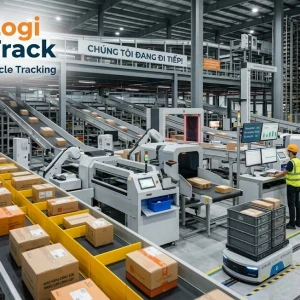
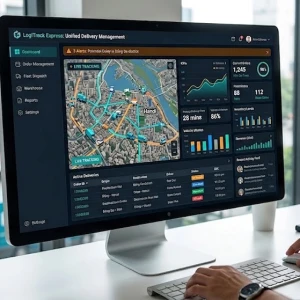
Implementing courier management software has become the backbone of every logistics business that wants to survive and thrive in today’s competitive market.
In the era of the digital economy, the transportation and delivery industry is no longer just about moving goods from point A to point B. It has become a race driven by technology, speed, and accuracy. Implementing courier management software has become the backbone of every logistics business that wants to survive and grow. This article explores why this solution is considered one of the most effective ways to manage modern delivery operations.
The Courier Industry Landscape and Digital Transformation Pressure
Vietnam’s courier industry is experiencing rapid growth thanks to the expansion of e-commerce platforms such as Shopee, Lazada, and TikTok Shop. However, this growth also brings significant operational challenges:
-
Data overload: When order volumes reach thousands or even tens of thousands per day, manual methods using Excel spreadsheets or paper records become ineffective.
-
Rising operating costs: Without route optimization, fuel expenses, vehicle depreciation, and labor costs can quickly consume profit margins.
-
Customer expectations: Modern customers demand complete transparency. They want to know where their package is, which driver is delivering it, and exactly when it will arrive.
As a result, implementing courier management software is not just a trend but a fundamental shift in management strategy, enabling businesses to digitize their entire operational process.
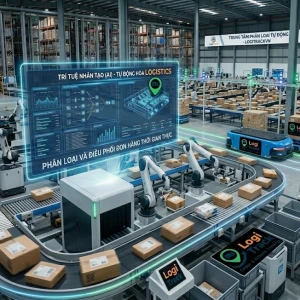
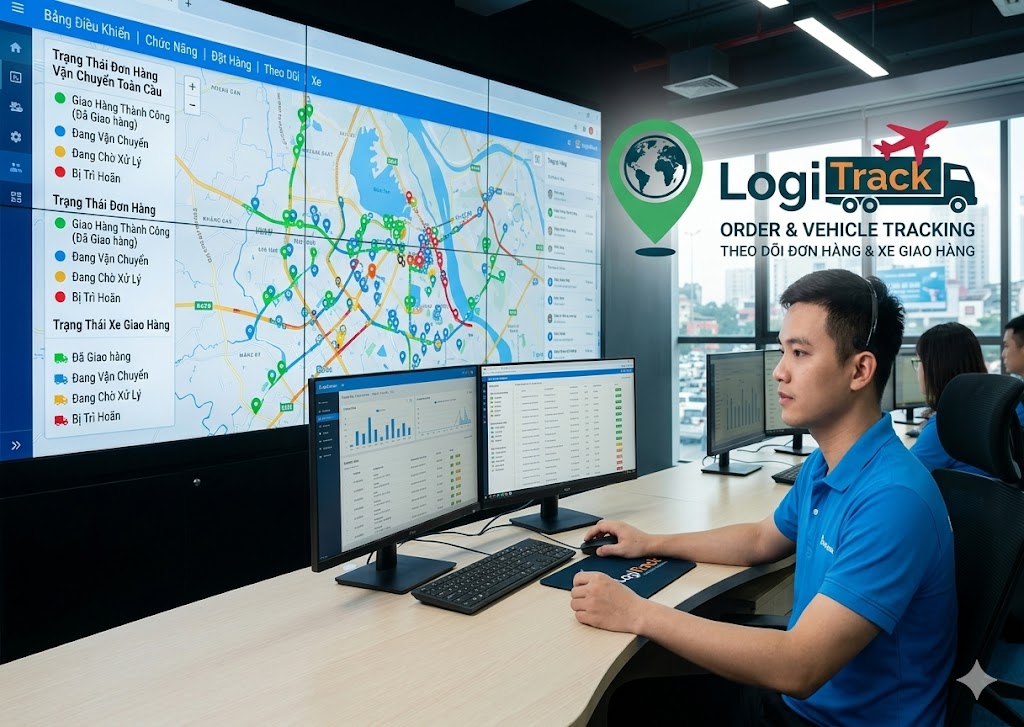 The software system allows dispatchers to monitor all shipment statuses on a real-time map.
What Problems Does Courier Management Software Solve?
- Automated Order Creation and Processing
Instead of manually entering customer information and shipment details, courier management software enables businesses to synchronize orders directly from e-commerce platforms or sales websites through API integrations. With just a few clicks, thousands of shipments can be created, automatically categorized by distribution center, and printed with shipping labels in bulk. This can reduce order processing time by up to 90%.
- Optimizing Last-Mile Delivery Operations
Last-mile delivery is often the most expensive stage in the logistics chain. The software uses intelligent route optimization algorithms to automatically assign deliveries to drivers based on geographic areas and vehicle capacity. The system recommends the most efficient routes, avoids traffic congestion, and helps drivers complete more deliveries within a shorter period of time.
- Accurate COD Management and Financial Reconciliation
For courier companies, managing Cash on Delivery (COD) payments is a critical process. Courier management software provides a closed-loop reconciliation system:
Driver collects payment → Updates delivery status through the mobile app → System records receivables → Accounting reconciles and transfers payment to the seller. Every transaction is recorded and traceable, eliminating revenue leakage and reconciliation errors.
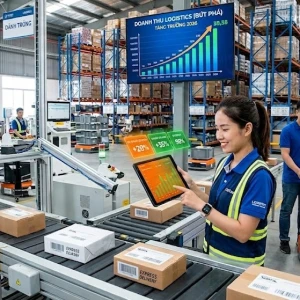
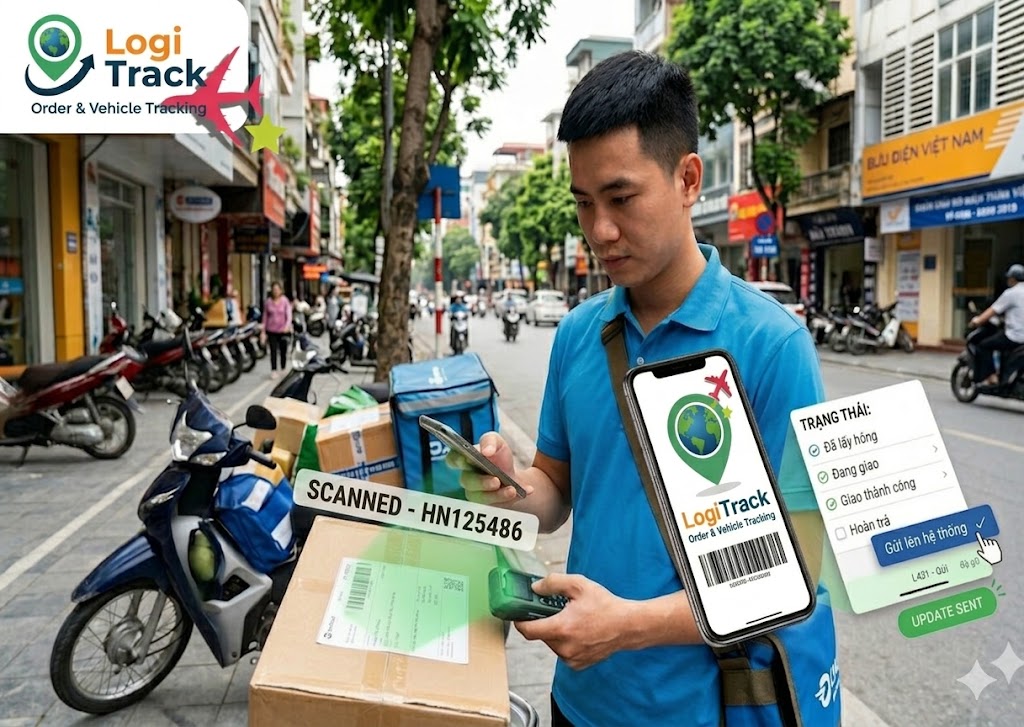 Delivery personnel use a mobile application to scan barcodes and instantly update shipment statuses within the system.
Essential Features of Modern Courier Management Software
To maximize operational efficiency, a modern courier management software solution should include the following core capabilities:
- Real-Time GPS Tracking
This feature allows managers to know exactly where delivery drivers are and which routes they have traveled. It not only helps monitor driver accountability and transparency but also enables timely support when drivers encounter issues on the road.
- Electronic Proof of Delivery (PoD) Technology
There is no longer a need for paper delivery notes that can easily be lost or misplaced. With a Shipper App, delivery personnel simply take a photo of the package at the delivery location and collect the recipient’s electronic signature. The delivery image and GPS coordinates are instantly transmitted to the system and can be viewed by customers in real time.
- Business Intelligence (BI) Reporting System
A good software solution should also serve as a reliable business advisor. Through reports on delivery success rates, return rates by region, and the performance of individual delivery drivers, managers gain a comprehensive overview of operations. These insights help businesses make informed decisions and adjust their operational and workforce strategies more effectively.
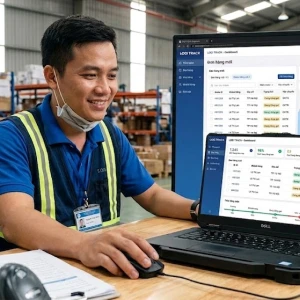
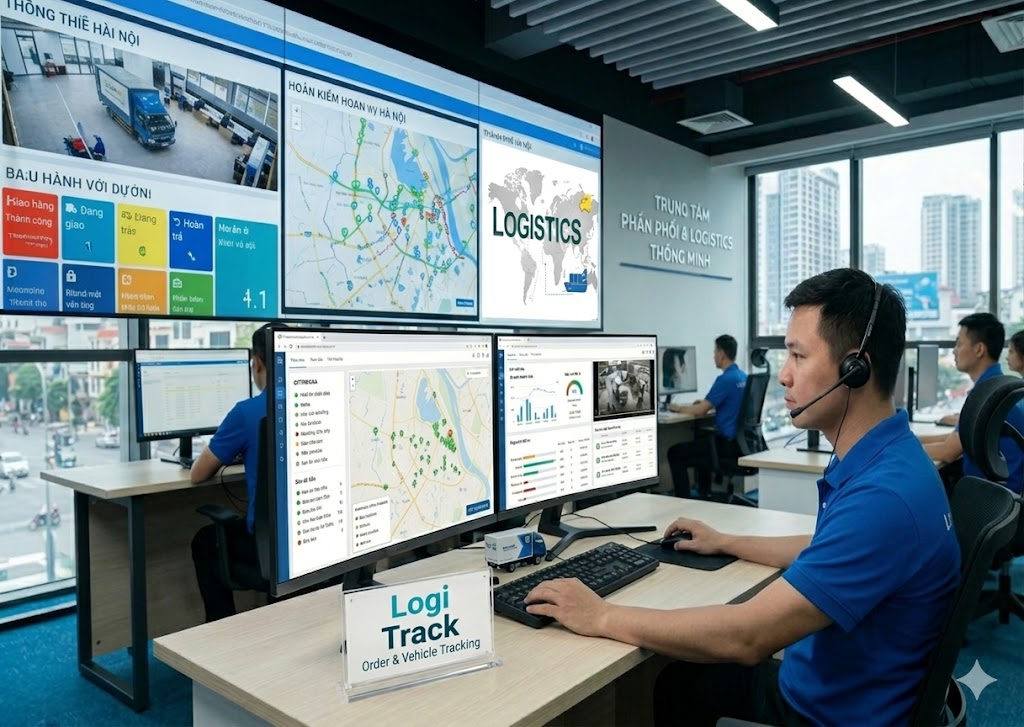 The web-based dashboard enables managers to monitor the performance of distribution centers and vehicle fleets efficiently.
Why Courier Businesses in Hanoi Should Prioritize Local Software Solutions
With Vietnam’s unique geography and the complex traffic conditions of major cities such as Hanoi, using software solutions specifically designed for the Vietnamese market offers significant advantages:
- Understanding Local Administrative Addresses: The system is optimized for Vietnamese address structures down to wards, communes, hamlets, and villages, enabling more accurate location identification and route zoning than many international software solutions.
- Multi-Channel Integration: Easily connects with local delivery partners, popular e-wallets such as MoMo and VNPay, as well as domestic e-commerce platforms.
- 24/7 Technical Support: Local technical teams can respond more quickly to server issues and customize features based on the specific operational requirements of Vietnamese businesses.
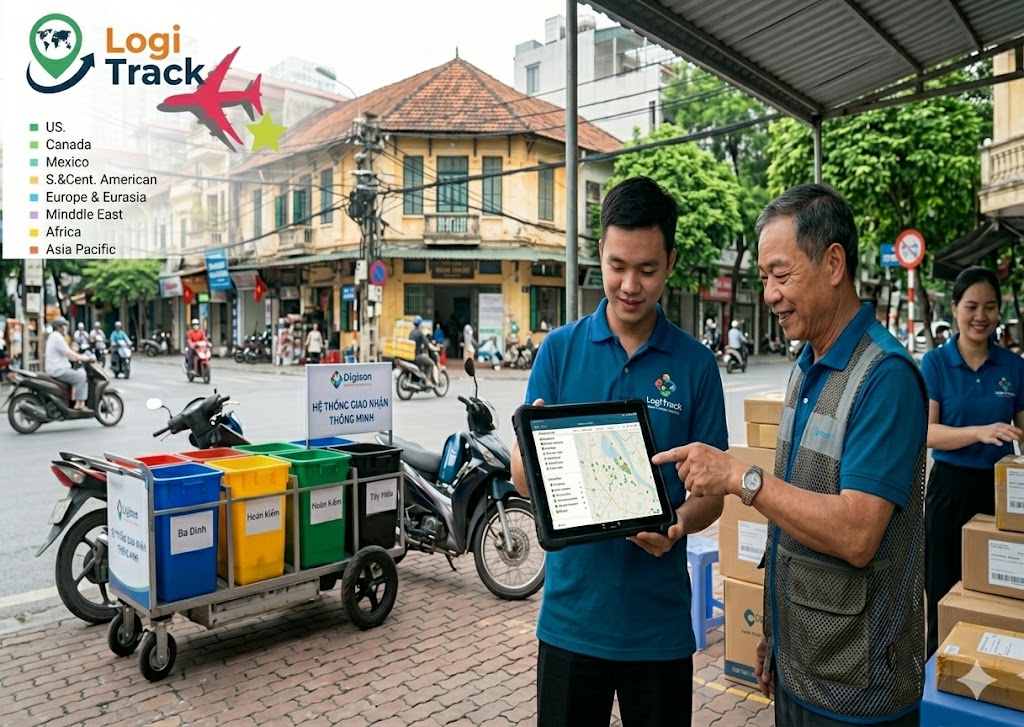 Businesses should select a courier management software solution with a user-friendly interface and simple navigation.
Future Trends: AI and Big Data in Courier Management Software
Between 2026 and 2030, courier management software will evolve beyond operational management. Artificial Intelligence (AI) and Big Data technologies will introduce powerful capabilities such as:
- Demand Forecasting: AI will analyze historical data and predict future order volumes, allowing businesses to prepare staff and transportation resources before peak seasons occur.
- Automated Customer Support: AI-powered chatbots will handle shipment tracking requests, customer inquiries, and complaint resolution automatically.
- Smart Warehouse Optimization: The system will recommend warehouse layouts and inventory placement strategies based on product demand and shipping frequency.
Conclusion
Investing in courier management software is a long-term strategy that helps businesses optimize resources, improve operational efficiency, and strengthen their competitive position. In a market where speed and service quality determine success, technology is the most powerful advantage a logistics company can have. Businesses that embrace digital transformation today will be better prepared to compete and grow in the future.
If you are operating a transportation company or managing a courier network, now is the time to begin your digital transformation journey. Solutions such as Logitrack can serve as reliable partners, helping you manage operations intelligently, efficiently, and at scale.