Courier management software has become the backbone that helps logistics businesses transition from traditional operations to intelligent and comprehensive warehouse management.
In the context of booming e-commerce and increasingly complex global supply chains, optimizing transportation processes is no longer an option but a critical requirement for survival. Courier management software has become the backbone that enables logistics companies to transform from conventional management models into smart, fully integrated logistics operations.
What Is Courier Management Software?
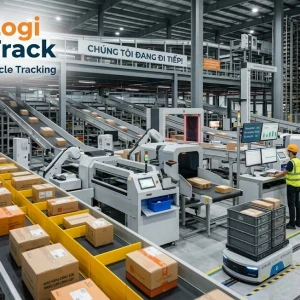
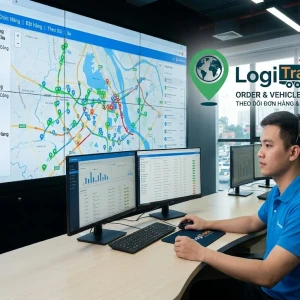
 Technology helps automate order sorting and dispatch processes with greater accuracy.
Courier management software (Express Delivery Software) is a technology solution that integrates functions ranging from order intake, sorting, and warehouse operations to last-mile delivery. Unlike standalone applications, this system creates an ecosystem that connects senders, logistics providers, and recipients on a single platform.
Today, businesses are increasingly seeking courier management software solutions with high customization capabilities, support for automating repetitive tasks, and real-time operational visibility.
Core Features of Courier Management Software
To achieve comprehensive warehouse and logistics management, a standard solution should include the following modules:
- Order Management System (OMS): Automatically receives orders from multiple channels (websites, mobile apps, and e-commerce platforms) and synchronizes processing statuses.
- Track & Trace: Allows both businesses and customers to monitor shipment locations in real time through GPS tracking.
- Route Optimization: Uses algorithms to calculate the shortest routes, reducing fuel costs and delivery times.
- Warehouse Management System (WMS): Controls inbound, outbound, and inventory processes, manages storage zones, and provides overload alerts.
- COD and Payment Management: Closely monitors cash-on-delivery collections and automatically reconciles transactions with delivery personnel.
Transformational Benefits for Comprehensive Logistics Management
Implementing courier management software provides significant advantages that help businesses solve critical challenges related to costs and operational efficiency.
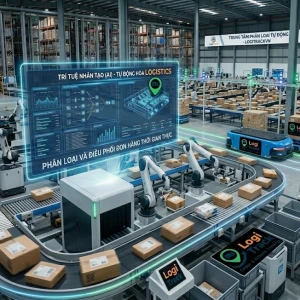
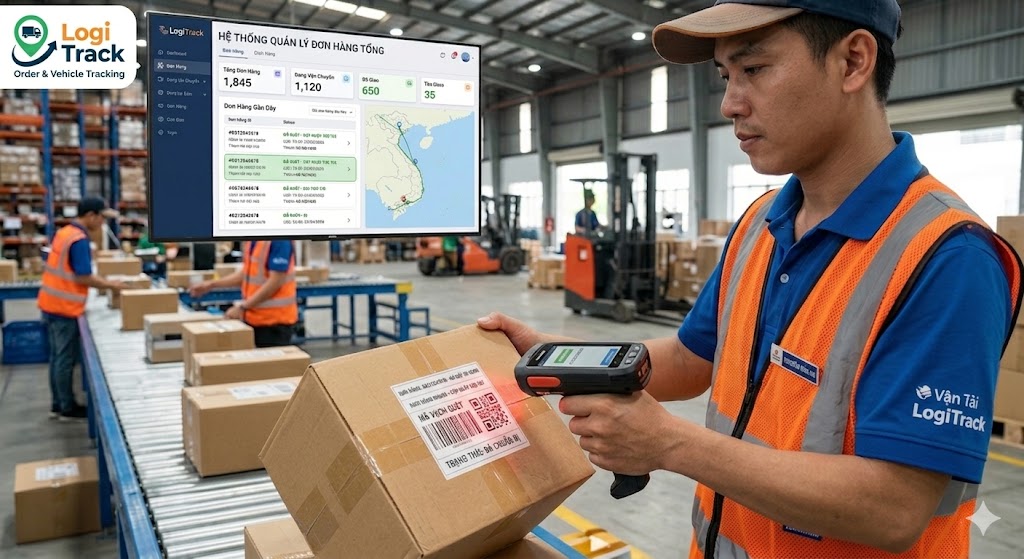 Barcode scanning allows shipment information to be instantly updated across the central system.
- Reduced Operating Costs
Logistics expenses typically account for a large portion of product costs. Through Route Optimization, businesses can reduce fuel consumption and vehicle depreciation costs by as much as 20–30%. At the same time, automation reduces dependence on manual labor, minimizing costly errors and operational waste.
- Improved Accuracy and Processing Speed
In logistics management, inaccurate data is one of the biggest challenges. Courier management software eliminates manual paperwork and data entry processes.
All shipment information—including tracking numbers, package weight, and delivery addresses—is captured through QR codes and barcode scanning, reducing error rates to nearly zero.
- Enhanced Customer Experience
Modern customers always want to know exactly where their packages are. Automated SMS and email notifications, combined with online shipment tracking portals, increase transparency and customer trust. Higher customer satisfaction often leads to stronger customer retention and sustainable business growth.
The Role of Courier Management Software in the Global Supply Chain
Comprehensive logistics management goes beyond simply delivering goods from warehouses to consumers. It also includes reverse logistics, multimodal transportation management, and coordination among distribution hubs.
- Efficient Reverse Logistics Management
The return process is often complex and costly. Courier management software enables businesses to establish structured workflows for handling returned or defective goods. This allows products to be returned to inventory more quickly for reuse, repair, or resale, minimizing losses.
- Connecting Every Link in the Supply Chain
The software serves as a common language connecting warehouses, vehicle fleets, and business departments. Operational data generated by the system helps managers forecast seasonal demand patterns and optimize inventory levels accordingly.
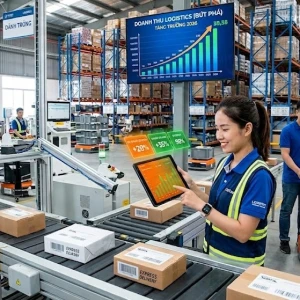
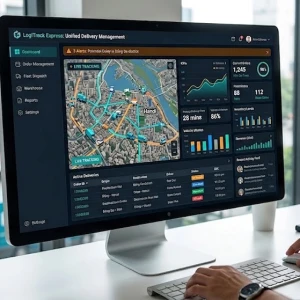
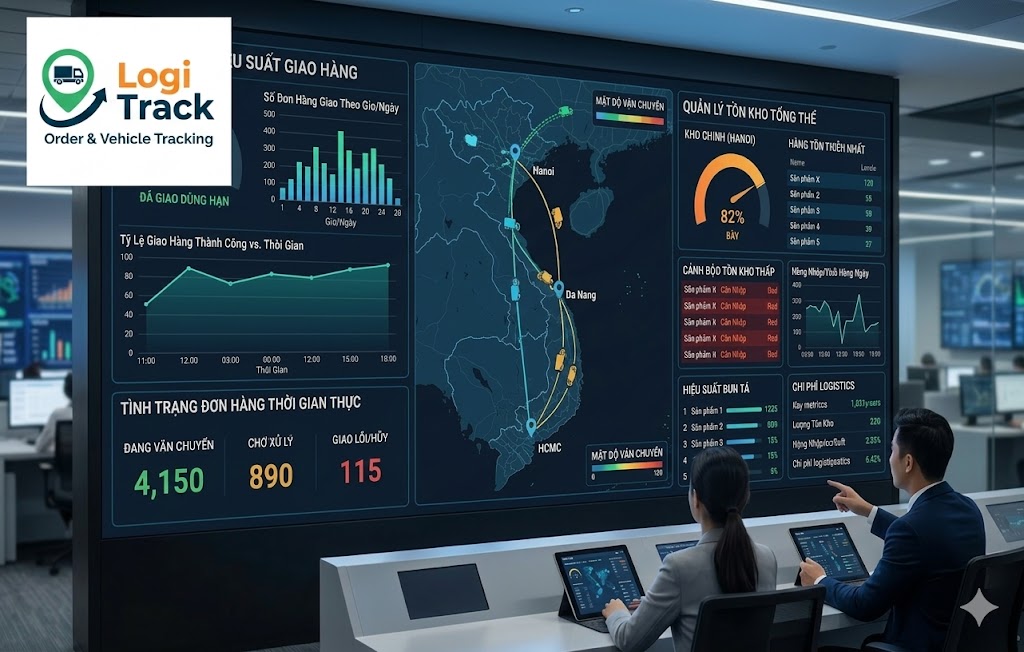 Interactive dashboards help managers monitor delivery performance and inventory levels from a comprehensive perspective.
Technology Trends in Courier Management Software (2024–2026)
Technology continues to reshape the logistics industry through groundbreaking innovations:
- Artificial Intelligence (AI)
AI not only optimizes routes but also predicts delivery times with minute-level accuracy by factoring in traffic conditions and weather data.
- Internet of Things (IoT)
Sensors attached to packages can monitor temperature, humidity, and physical impact, making them particularly valuable for food, pharmaceutical, and healthcare shipments.
- Cloud Computing
Cloud-based systems synchronize data continuously, allowing managers to oversee logistics operations from anywhere using a smartphone.
- Blockchain Technology
Blockchain enhances transparency and security for payment transactions and international shipping contracts.
How to Choose the Right Courier Management Software
Not every expensive solution is necessarily the best. To select the most suitable platform for comprehensive logistics management, businesses should consider the following factors:
- Scalability: The software should be capable of supporting growth from 1,000 shipments per month to 100,000 shipments per month without performance degradation.
- Ease of Use: The interface should be intuitive and user-friendly for warehouse staff, dispatch operators, and delivery drivers using mobile applications.
- API Integration Capabilities: The system should easily integrate with e-commerce platforms such as Shopee, Lazada, TikTok Shop, and existing accounting software.
- Technical Support: Reliable 24/7 support is essential to ensure that operational disruptions are resolved quickly and supply chains remain uninterrupted.
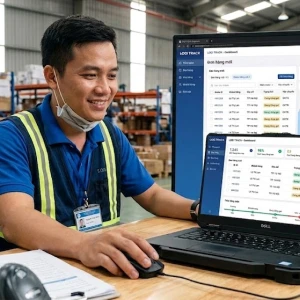
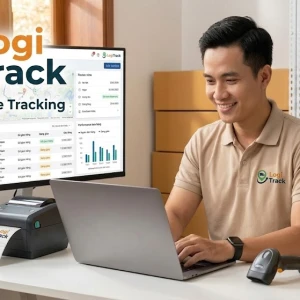
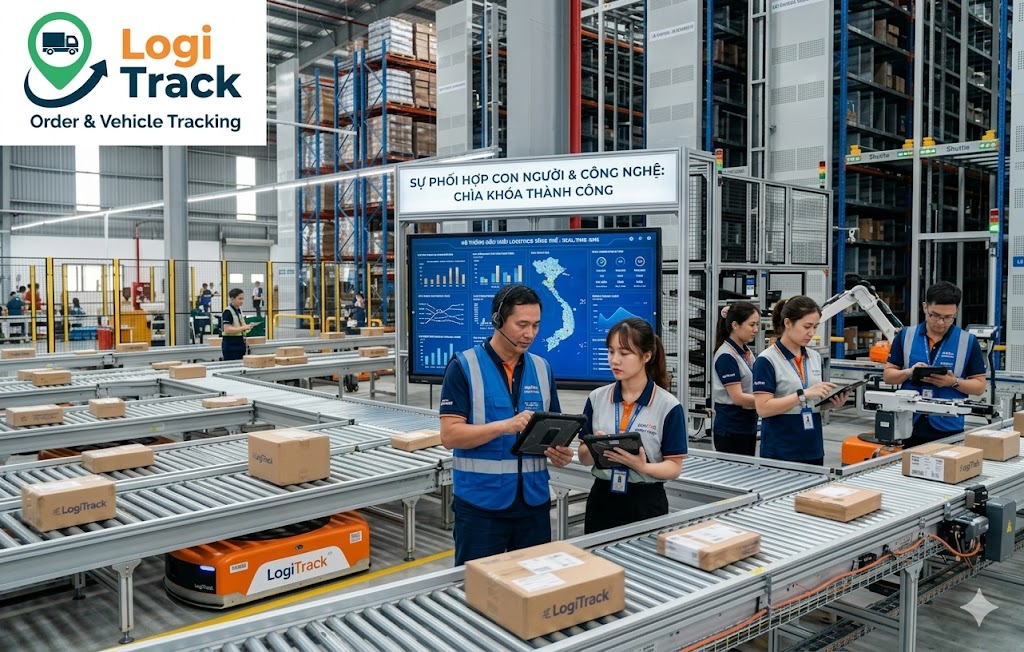 The combination of people and technology is the key to success in modern logistics.
Investing in courier management software is a strategic step toward modernizing comprehensive warehouse and logistics management. It not only helps businesses survive in an increasingly competitive environment but also creates significant advantages in operational efficiency, cost control, and service quality.
In the future, as the distinction between warehousing and transportation continues to blur, a powerful courier management software solution will become the key to controlling the entire value chain and expanding successfully into international markets.